


- 200,000+ people reached
- 1,000+ community leaders trained
- 633 health workers being trained
- Critical supplies delivered within the first week
- Contact tracing support underway
The call came, and the response began.
Within days of the Ebola outbreak declaration in the eastern Democratic Republic of the Congo, Corus organization IMA World Health was working alongside the Ministry of Health to deliver critical supplies, assess infection risks in health facilities, support surveillance efforts and mobilize community networks.
Weeks later, those efforts have already reached hundreds of thousands of people and are helping strengthen the systems needed to contain the outbreak.
Rapid support for frontline health facilities
One of our first priorities was ensuring that health workers had the resources needed to respond safely.
Within the first week of the outbreak, we delivered essential infection prevention and control (IPC) supplies to hospitals in Goma and to the Bunagana border post, a key transit point between DRC and Uganda.
Our teams also began assessing health facilities across North and South Kivu to identify gaps and strengthen preparedness where it is needed most.
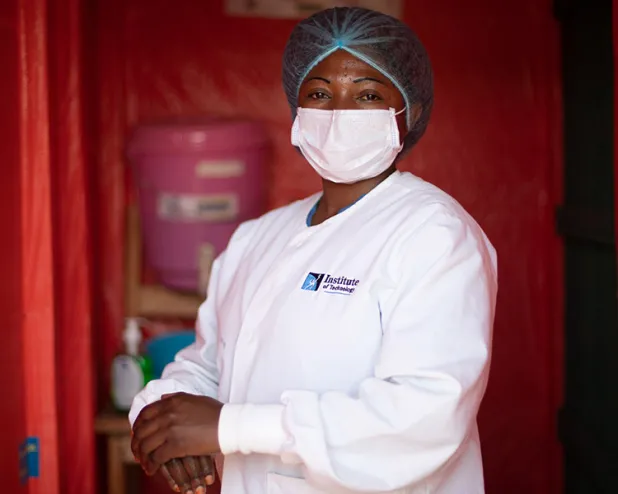
At the same time, healthcare workers and community health personnel have begun receiving training on Ebola-specific triage, isolation procedures and infection prevention practices.
Reaching communities with trusted information
Containing Ebola requires more than a clinical response.
Through risk communication and community engagement activities, our teams have already reached more than 200,000 people with information on Ebola symptoms, prevention and response measures.
In Goma, more than 1,000 trusted voices — from teachers and faith leaders to traditional healers and transport workers — are helping ensure communities have accurate information about Ebola and know when to seek care.
By working through trusted local networks, these efforts help ensure prevention messages reach people quickly and effectively.
Strengthening surveillance and contact tracing
Early detection remains one of the most important tools in controlling outbreaks.
With support from the U.S. Department of State, IMA World Health is partnering with the Ministry of Health to strengthen surveillance and contact tracing systems. Planned activities include deploying digitized contact tracing teams and providing the resources needed to support monitoring and follow-up efforts.
These investments will support the current response while strengthening preparedness for future public health threats.
Early signs of progress
While response efforts remain ongoing, there have already been encouraging milestones.
Our team worked alongside the Ministry of Health, the World Health Organization and other partners to support the safe discharge and community reintegration of Goma's first recovered Ebola patient.
The achievement reflects the importance of rapid action, strong coordination and local leadership in responding to outbreaks.
Looking ahead
As the response continues, IMA World Health is expanding support for frontline health workers, strengthening infection prevention measures, scaling community outreach efforts and helping local authorities address emerging needs.
In the coming weeks, we'll share stories from the health workers, community leaders, and response teams helping stop Ebola's spread across eastern DRC.
Key questions about IMA World Health's Ebola response
What is IMA World Health doing to support the Ebola response in DRC?
IMA World Health is supporting the Ministry of Health through infection prevention and control activities, health worker training, community engagement, surveillance strengthening and contact tracing support.
How many people has IMA World Health reached through Ebola prevention efforts?
Response activities have already reached more than 200,000 people with information on Ebola symptoms, prevention measures and when to seek care.
Why is community engagement important during an Ebola outbreak?
rusted local leaders help communities access accurate information, identify symptoms early and counter misinformation. More than 1,000 community leaders and influencers are supporting these efforts in Goma.
How is IMA World Health helping to strengthen outbreak preparedness?
In addition to supporting the immediate response, IMA World Health is helping strengthen surveillance systems, improve infection prevention practices in health facilities and train frontline health workers to better respond to future public health threats.